English Communication for
International Environments

Language offers far more than the ability to exchange information. It provides access to new perspectives, cultures, and ways of understanding the world.
Through English, organisations build relationships, exchange knowledge, collaborate across cultures, and participate in professional conversations that shape opportunities and decisions.
For businesses working internationally, English is not only a practical tool; it influences the clarity of ideas, the confidence with which people participate, the quality of relationships, and the effectiveness of communication between languages, cultures, and contexts.
Who Is This For?
Organisations that recognise the value of effective communication in global settings.
Depending on organisational needs and objectives, the work we do may take place with individuals, small groups, or teams whose roles include communicating, collaborating and building relationships across languages and cultures.
Participants are often accomplished professionals who already use English regularly and want to engage more fully with the language, the people they interact with in their day-to-day work, and the contexts in which international communication takes place.
New Layers of Understanding
English becomes richer when we see it in context. A wider vocabulary can offer more options, but those options only become useful when we know how to use them appropriately in the moment. Deeper understanding helps us widen our perspective and interpret meaning as it changes through tone, relationship, situation, rhythm, and intention.
Language also needs space to breathe. It becomes more flexible when we feel relaxed and at home in English, able to pause, listen, adjust, and express ourselves in ways that fit the moment.
This broader perspective allows English to become something more than a collection of rules and vocabulary: a flexible means of understanding, expression, and connection.
Working Together: A Focus on Real Communication
Developing English involves more than language level alone. The way we understand others, express ourselves, and respond to different situations is influenced by a range of interconnected factors.
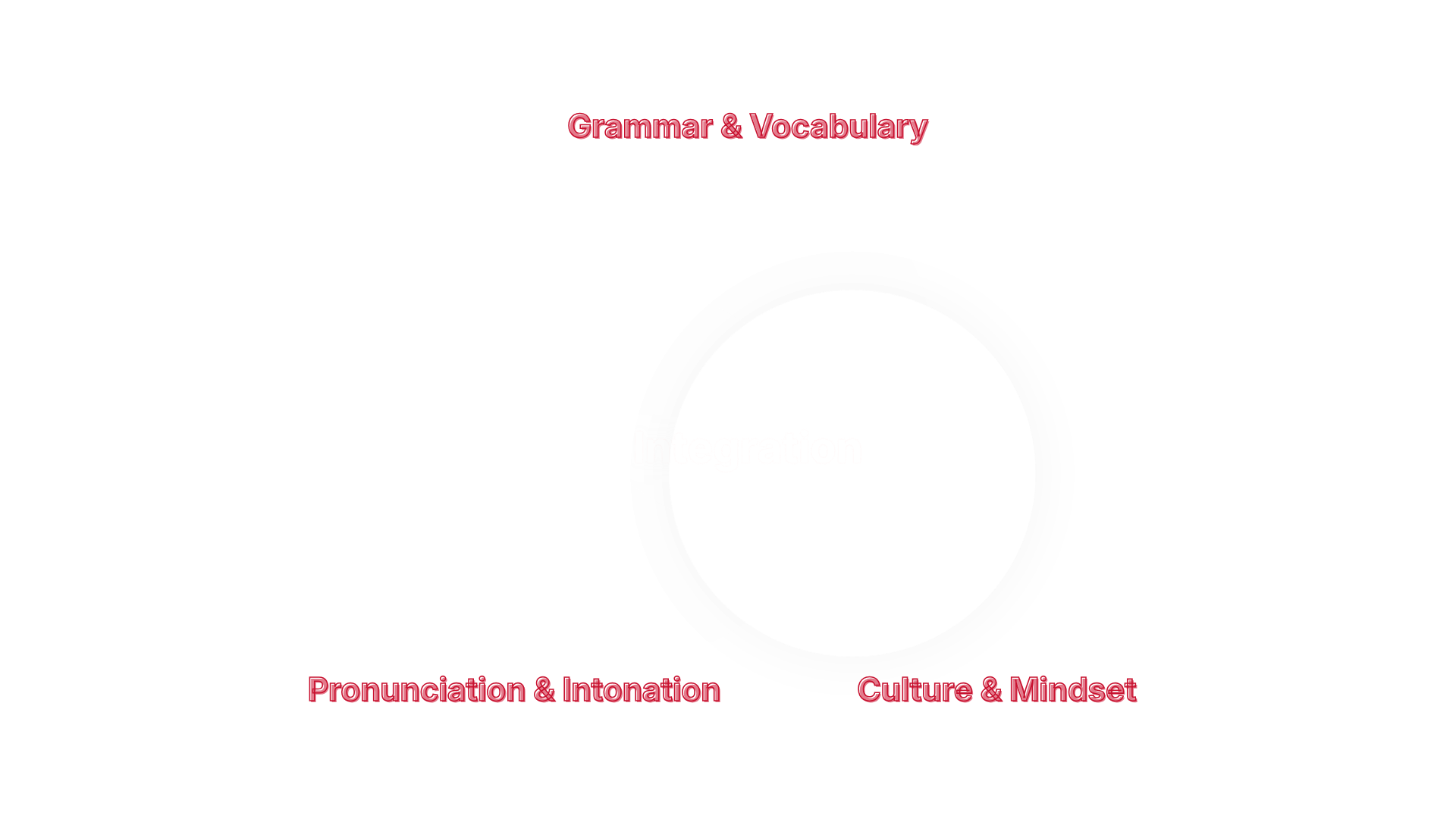
The areas below provide a framework for understanding and developing the different elements that contribute to meaningful communication in English.
Grammar and Vocabulary
Upgrading your language to a sophisticated level requires deep structural awareness, not memorisation. True integration happens when you understand how structure and vocabulary choice indicate tone and intention.
Pronunciation and Intonation
Speech is a physical practice. Tuning your ear to the natural rhythm, stress, and mechanics of English removes friction from conversations, ensuring you are understood with ease and that your authentic presence comes through effortlessly.
Culture and Mindset
True proficiency requires a shift in perspective. Moving beyond linguistic accuracy means understanding unwritten cultural codes while cultivating a grounded mindset that lets go of the need for perfection in performance.


A Deeper Engagement
Not everyone needs the same thing from English.
For some organisations, being functional is enough.
Others recognise that English can play a larger role in how people collaborate, share knowledge, build relationships, and contribute across cultures.
They want their teams to understand more, express themselves more fully, participate with greater confidence, and engage more deeply with the people, ideas, and perspectives that English brings into their work and lives.
In this context, English management is more than a useful skill. It becomes part of how people take part in conversations, relationships, and responsibilities that are paramount to the organisation.
Experience Speaks
With more than 20 years’ experience in English language development for adults, Tanya Meyer now works with organisations to strengthen the English their teams need and use in day-to-day activities, interactions, and responsibilities.
Her work brings together assessment, programme design, and English language development in a way that reflects the needs of the organisation and the people involved.
Tanya is bilingual in English and Spanish, speaks fluent Brazilian Portuguese, and brings business experience as well as Cambridge University teaching qualifications.

Start the Conversation
To discuss English communication development for your organisation, send a message and we can explore the most appropriate next step together.